
Roof membranes, correctly selected
Published on 09.09.2026 · Isoflect Insulation technical team
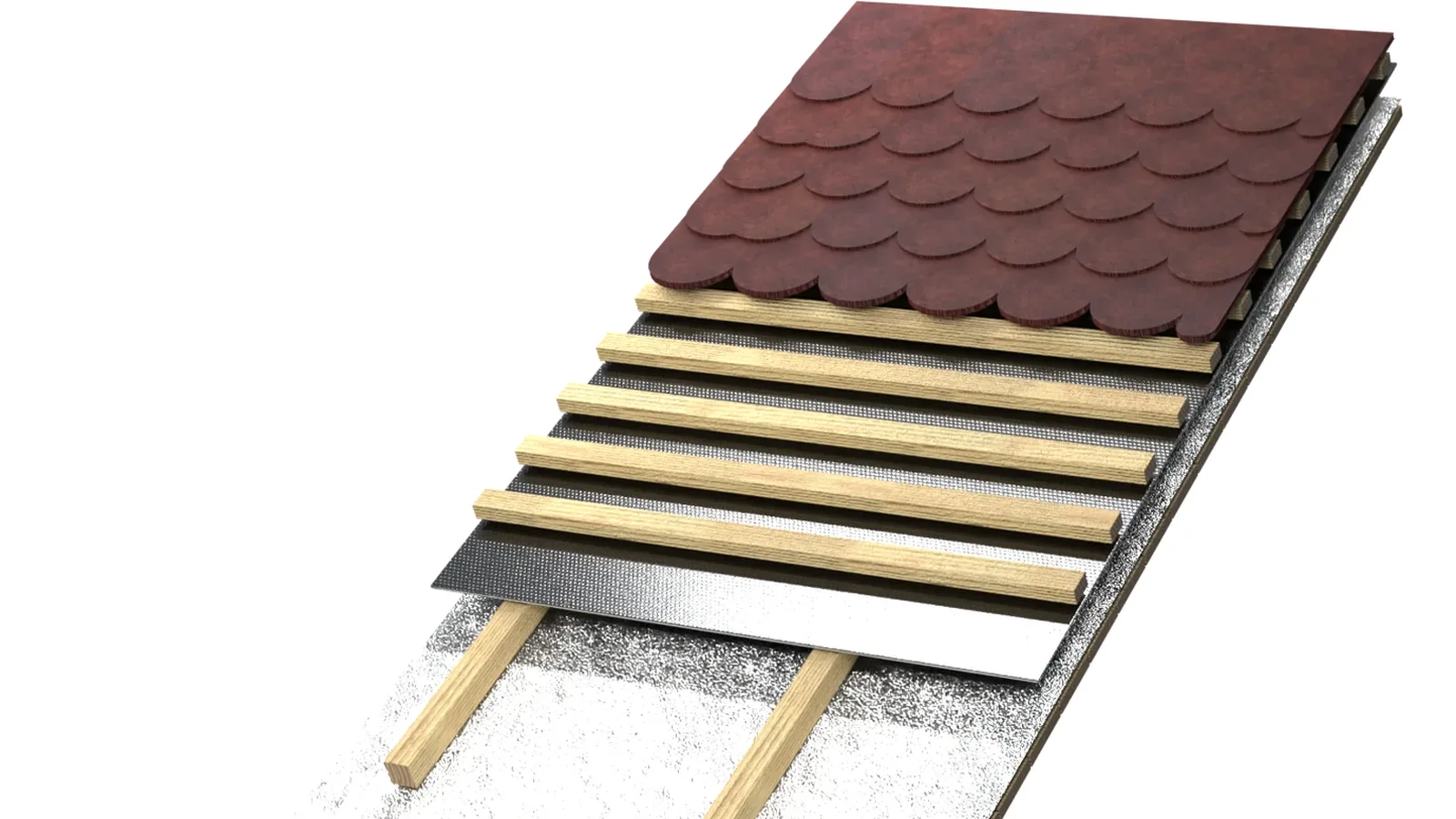
A habitable attic that smells of damp, stained roof boarding or settled mineral wool does not automatically indicate a broken roof covering. Often the problem originates in the invisible layer between the roof covering, the structure and the insulation. When searching for “roof membranes”, the aim is not to choose a membrane at random, but to build a system that correctly drains water, limits air infiltration and controls vapour from the interior.
A well-chosen membrane protects the investment in thermal insulation and helps the roof perform predictably in all seasons. In a home in the USA, where the differences between hot and humid, cold or mixed climates are considerable, the same solution is not suitable for every roof. The type of roof covering, ventilation, pitch, climate zone and use of the attic matter as much as the material itself.
What a roof membrane does
Beneath the roof covering, the membrane serves to manage water coming from the exterior and moisture that may arise within the system. However, not all membranes work in the same way. Some are designed as a protective layer against water and wind, others allow vapour to diffuse towards the exterior, and others limit the ingress of vapour from the interior space into the thermal insulation.
In a high-performance roof, each layer must have a clear function. The roof covering takes rain, snow and solar radiation. The membrane beneath the roof covering provides a second line of defence against accidental leaks and protects the structure during installation. The insulation reduces heat transfer, while the vapour control layer and airtightness reduce the risk of warm, humid indoor air reaching cold zones where it may condense.
This difference is essential: vapour control is not the same as waterproofing, and a diffusion membrane does not automatically replace the vapour barrier. A well-designed system uses the right material in the right position.
Roof membranes: types and uses
The diffusion membrane, installed towards the exterior
The diffusion membrane is generally installed beneath the roof covering, on the external side of the thermal insulation. It must stop water and draughts that may penetrate from the exterior, while allowing residual vapour within the structure to migrate outwards. It is a common choice for ventilated roofs with a timber structure and tile, metal sheet or shingle coverings, provided that the assembly is correctly designed.
Performance is not limited to thickness. Check vapour permeability, water resistance, tear resistance, UV stability during temporary exposure and compatibility with the roof pitch. Metal roof coverings require additional attention, since temperature variations and the risk of condensation on the underside of the sheet can be significant.
The vapour barrier or vapour retarder, installed towards the interior
On the warm side of the envelope, a vapour control layer limits the amount of moisture entering the thermal insulation from the home. This is particularly relevant in occupied spaces: attic bedrooms, bathrooms, kitchens and areas with high indoor humidity.
The choice depends on the climate and on the build-up of the wall or roof. In cold climates, vapour control towards the interior is often stricter. In hot and humid climates, particularly in air-conditioned homes, the direction of vapour flow may vary seasonally. For this reason, a membrane with unsuitable permeability may block the necessary drying of the structure. Verifying local code requirements and the thermal design remains a practical step, not a formality.
The reflective, airtight membrane
Reflective membranes can contribute to thermal comfort when they are integrated into a system that includes an air space and correct sealing. They can reduce radiant heat transfer, a useful advantage beneath roofs heavily exposed to the sun. Nevertheless, they should not be treated as a substitute for the required thickness of insulation with an adequate R-value.
This is where one of the most costly misunderstandings arises: a reflective material may have several functions, but the result depends on its position, on the taped joints and on the continuity of the layer. If air circulates freely through the joints or around penetrations, infiltration losses may cancel out a significant part of the benefits.
How to choose the system according to the roof
Before comparing rolls and prices per square metre, establish what type of roof you have. An unheated, ventilated attic behaves differently from a habitable attic insulated between the rafters. Likewise, a low-pitch roof has different water drainage requirements from a steep one, and a metal roof may require a careful strategy for condensation.
For an unheated attic, the insulation is often placed at the level of the ceiling slab, and the roof must be ventilated appropriately. In this case, air control between the occupied space and the attic is critical. Indoor air escaping through light fittings, hatches, ducts or gaps can carry far more moisture than slow diffusion through materials.
For a habitable attic, the layers are installed along the pitch and must be carefully coordinated. A typical configuration includes the roof covering, the ventilation space where required, the diffusion membrane, the thermal insulation, the vapour control layer and the interior finish. The exact sequence is adapted to the climate, the type of insulation and the details of the structure.
If you are renovating without completely removing the roof covering, the options may be limited. In this situation, it makes no sense to choose a membrane solely by its name. It is safer to assess where an impermeable layer already exists, whether the timber can dry towards the interior or exterior, and what continuity you can achieve around roof windows, chimneys and services.
The installation details that determine the result
A quality membrane installed carelessly does not deliver assured performance. Overlaps must be made in accordance with the manufacturer's instructions, and sealing tapes must be compatible with the substrate and with the membrane. Dust, damp timber, very low temperatures or excessive tension in the membrane may compromise bonding and the durability of the joints.
Pay attention to every perforation. Pipes, cables, vents, roof windows and chimneys create vulnerable points. These require sleeves, tapes and connection details, not merely hastily applied silicone. The sealing must remain functional when the structure moves slightly owing to variations in temperature and humidity.
Ventilation should not be mistaken for an excuse for poor sealing. A ventilated space beneath the roof covering can remove accidental moisture, but it cannot permanently compensate for humid air pushed from the home into the roof. The correct system combines airtightness, vapour control, insulation and ventilation designed for the configuration in question.
Common mistakes that increase the risk of condensation
The first mistake is using an impermeable membrane towards the exterior that does not allow the assembly to dry, even though the roof requires diffusion. The second is installing a vapour retarder interrupted by hundreds of perforations and untaped joints. The material may be present, but its function becomes incomplete.
Another error is compressing the thermal insulation between the rafters or leaving gaps around structural elements. Uneven insulation creates thermal bridges, and cold surfaces promote condensation. Equally problematic is choosing a membrane solely on price, without comparing the technical data and compatibility with the existing system.
For habitable attic, unheated attic or lightweight roof projects, Isoflect can assist in configuring a tailored package, so that the membrane, the insulation and the sealing accessories work together rather than separately.
Before closing the structure with plasterboard or timber panelling, check every joint, every service penetration and the direction in which the roof can dry. A few minutes invested at this stage can protect years of thermal comfort, a dry structure and better-controlled energy costs.
Not sure which Isoflect product suits you? See Reflectiva Roof Pro or open the package configurator to find out exactly what you need and in what quantity.