
How to choose a diffusion membrane for the roof
Published on 28.07.2026 · Isoflect Insulation technical team
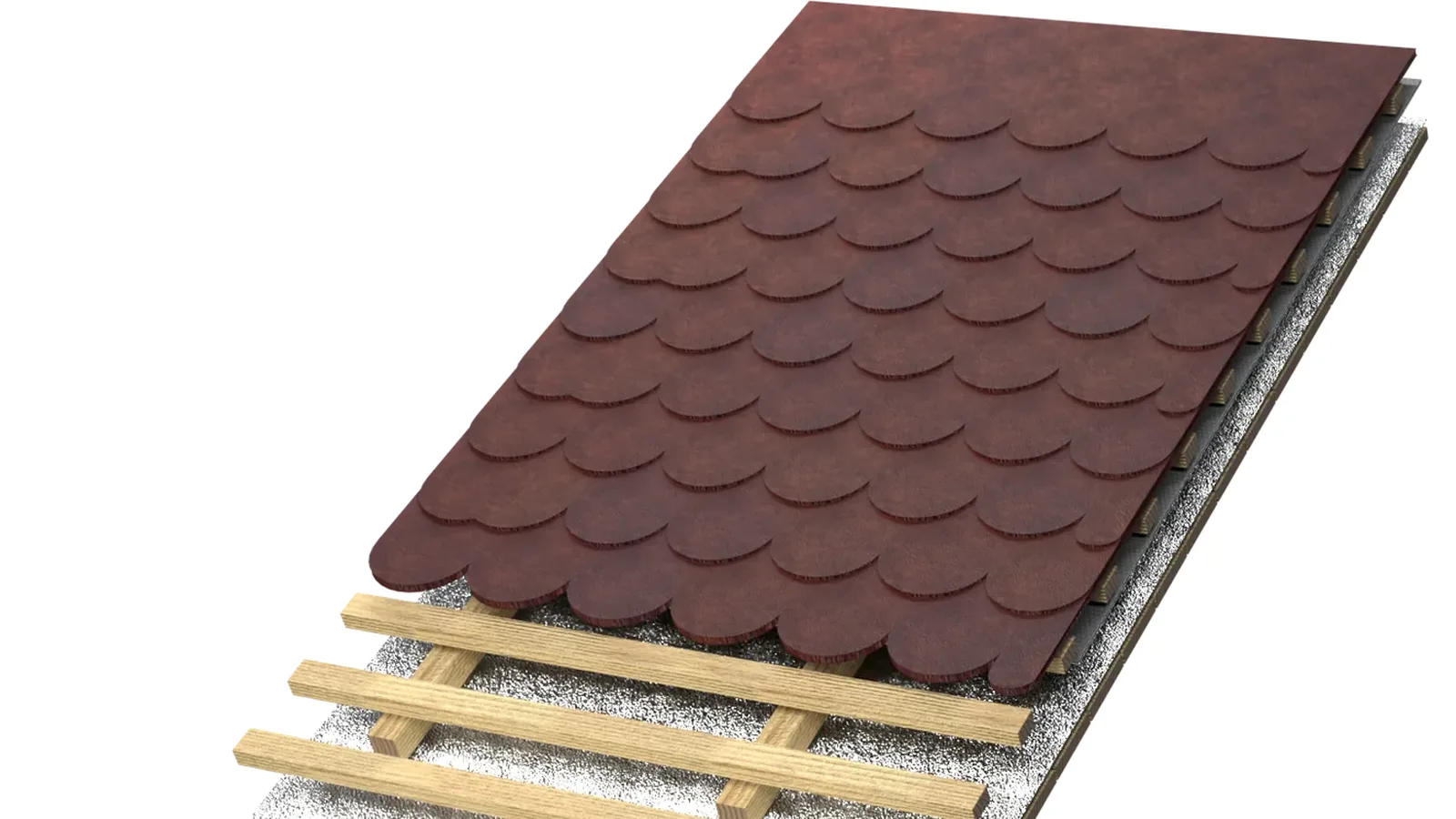
Beneath the roof covering, a small quantity of water can produce major effects: damp insulation, damaged timber, a smell of mould and higher heating or cooling bills. A roof diffusion membrane is not a membrane installed merely “for the sake of it”. It is the layer that protects the thermal insulation from moisture coming from outside, while allowing vapour from inside the construction to escape to the exterior in a controlled manner.
For a habitable attic, an insulated attic or a building with a timber roof structure, the choice of membrane must be coordinated with the entire roof build-up. The type of roof covering, the pitch, the ventilation, the insulation thickness and the way in which the interior is sealed all matter. The correct system delivers assured and predictable performance, not merely temporary protection during the first wind-driven rain.
What a diffusion membrane does beneath the roof
The diffusion membrane is generally installed on the outer side of the thermal insulation, beneath the final roof covering. Its role is twofold. On the one hand, it stops water that has accidentally penetrated beneath tiles, metal sheeting or shingles, as well as dust and wind-driven snow. On the other hand, it allows water vapour to escape from the insulation layer.
This capacity to release vapour is essential. In an occupied house, vapour is produced continuously: through cooking, showering, drying laundry, breathing or as a result of temperature differences between inside and outside. If vapour reaches the thermal insulation and cannot escape, it may condense in the cold areas of the roof. Insulation that retains moisture loses efficiency, and timber elements may be exposed to deterioration over time.
The membrane does not replace the roof covering. The roof covering remains the first barrier against the weather. The membrane is the second level of protection, designed to manage real operating situations: localised water ingress, condensation beneath the roof covering and vapour migrating from the interior.
Roof diffusion membrane or vapour barrier?
The two materials are often confused, although they operate in different zones and have opposite purposes. The diffusion membrane is positioned towards the exterior and allows vapour to pass through. The vapour barrier or vapour control membrane is installed towards the interior of the heated space and limits the ingress of vapour into the thermal insulation.
An efficient habitable attic does not rely on a single membrane. It requires a coherent build-up: internal finish, airtightness and vapour control layer, thermal insulation between or beneath the rafters, diffusion membrane, ventilation space and roof covering. When one of these layers is incorrectly chosen or incompletely installed, the risk of condensation increases.
For example, a highly vapour-permeable membrane installed beneath the roof covering cannot compensate for a vapour barrier that is perforated, has unsealed overlaps or unprotected penetrations around cables. Likewise, a correct vapour barrier does not resolve rainwater ingress that repeatedly reaches the thermal insulation through a damaged roof covering. Real protection comes from the functioning of the entire system.
The technical indicators that matter in the choice
It is not sufficient for the product to be described as a “roofing membrane”. To compare materials, consult the technical data sheet and check the performance characteristics relevant to your project.
Vapour permeability and the Sd value
The Sd value indicates the resistance of the material to the passage of vapour. For a diffusion membrane, a low Sd value indicates that vapour can escape more easily. In practice, highly permeable membranes are suitable for insulated roofs, including where the thermal insulation is installed close to the membrane.
Do not compare only the trade name or the thickness. Two membranes of similar appearance may behave differently with respect to vapour, water, UV radiation and mechanical stresses. The Sd specification must be analysed together with the internal sealing solution and the manufacturer’s recommendations for the roof build-up.
Water resistance
A membrane installed beneath the roof covering must resist water that may accidentally reach this area. Water resistance is particularly relevant on roofs with complex shapes, valley areas, penetrations for chimneys or roof windows, where workmanship must be very careful.
The material must also provide reliable protection during the construction phase, before the roof covering has been fully installed. Nevertheless, no membrane should be left exposed for longer than the period permitted by the manufacturer. Temporary UV resistance does not mean that the membrane may remain uncovered over the long term.
Mechanical strength and installation details
During installation, the membrane is tensioned, fixed with staples and crossed by counter-battens. A sufficiently strong structure reduces the risk of accidental tearing and facilitates work on site. However, final durability does not depend solely on the material. Correct overlaps, compatible sealing tapes and careful treatment of vulnerable areas are equally important.
Chimneys, roof windows, vents, antennas and changes of pitch require sealed details. A cut left open may become a pathway for water, dust or draughts, even if the selected membrane is of professional quality.
How to install correctly beneath the roof covering
The membrane is unrolled from the eaves towards the ridge, with overlaps oriented so that water is directed downwards rather than behind the layer. Overlaps must be made in accordance with the product's technical instructions and sealed wherever the system requires it. Do not assume that any simple overlap is sufficient for a roof exposed to wind or rain.
Counter-battens are normally installed over the membrane. They create the space required for ventilation beneath the roof covering and help to remove moisture. The battens then support the roof covering material. Without a correct path for air intake and exhaust, ventilation may be blocked even if the membrane has excellent diffusion properties.
At the eaves, the membrane must be integrated so that water is discharged to the exterior in a controlled manner, without closing off air circulation. At the ridge, the solution must allow air to be exhausted from the ventilated space while maintaining protection against water. These two ends of the roof largely determine whether ventilation actually functions or remains merely a design intention.
Situations in which the choice differs
In an unheated attic, where the thermal insulation is laid on the ceiling slab, the requirements may differ from those of a heated habitable attic with insulation between the rafters. In the unheated attic, ventilation of the volume beneath the roof becomes decisive. In the habitable attic, vapour control and airtightness on the interior side have a greater influence on comfort and on the risk of condensation.
Metal sheet roofs may require additional attention, since rapid temperature variations can promote condensation on the underside of the roof covering. In this case, the diffusion membrane, the ventilated space and the correct execution of details work together. In renovations, first check the condition of the roof boarding, the rafters and the roof covering. Installing a new membrane over a structure already affected by moisture does not eliminate the cause of the problem.
For low-pitch roofs, complex geometry or numerous penetrations, do not select the material solely on the basis of the price per square metre. A small saving on the membrane or accessories may result in high costs if water reaches the mineral wool, the plasterboard linings or the timber structure.
Mistakes that reduce roof performance
The most costly problems usually arise from seemingly minor details. A membrane installed the wrong way round, overlaps that are too short, unsealed perforations and the absence of compatible tapes are common mistakes. Equally problematic is compressing the thermal insulation or interrupting it at the rafters, where thermal bridges may form.
Another error is treating the diffusion membrane as a substitute for ventilation. The material can release vapour, but it cannot rapidly dry water originating from an active leak, nor can it replace the ventilated space required beneath the roof covering. A correct diagnosis always starts from the cause of the moisture, not from masking its effect.
In a well-designed system, the membrane, the insulation and the sealing are selected together. Isoflect Insulation recommends configuring the materials according to the actual installation area and the roof build-up, so that each layer performs its function without compromise. A technical discussion before ordering can prevent the purchase of incompatible products.
A dry roof cannot be seen from the inside, but it is felt through a more comfortable habitable attic, a protected structure and more predictable energy consumption. Choose the membrane according to the performance your home requires, and devote the same attention to installation as to the material itself.
Not sure which Isoflect product suits you? See Reflectiva Roof Pro or open the package configurator to find out exactly what you need and in what quantity.